
Steak pie is my favourite meal of all time. It is a traditional New Year’s Day dish in Scotland when it is known as Hogmanay pie. Steak pieces are cooked in a rich gravy until tender and nestled below buttery puff pastry.
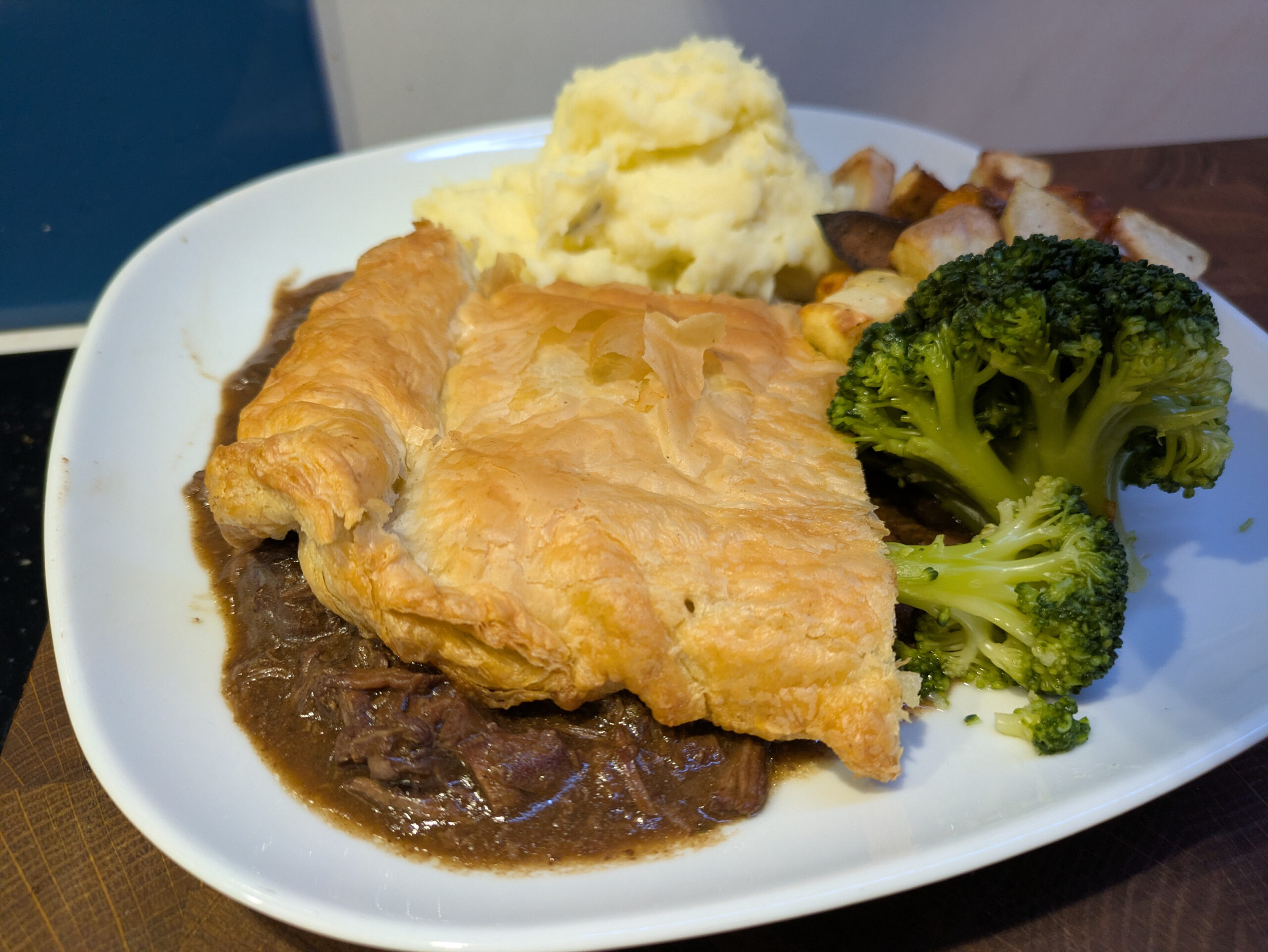
Steak Pie
Ingredients
Method
- Season beef with salt and pepper, and leave to sit for 20 minutes. I put this in a colander over a bowl to let the salt draw out the moisture. This liquid can be added to the strew later (once you add the stock). In the meantime, coarsely chop the onion and saute in a large pot with some oil until the onion is browned. Remove the onion from the pot and leave aside.
- Brown the beef in batches, setting cooked beef to the side. Do not worry about fully cooking the beef at this step.
- Add 1 tbsp of butter to the pot over a low heat. Return onion and beef to the pot, add the flour and stir until combined. Cook for a minute or two to cook the raw flour taste out.
- Increase heat to medium-high and add wine (or water) and scrap any pieces of meat stuck to the bottom of the pan. Reduce the wine by half and then add beef stock, thyme, worcestershire sauce and strained liquid from the beef if using.
- Pressure cooker: Cook on high for 30 minutes with a 15 minute natural release. On the hob: add an extra 200ml of water and simmer with the lid on for 1.5 hours adding a little more water if it ever gets too dry.
- [Optional step] Wait for the beef and gravy to cool down and chill covered in the fridge overnight. This improves the flavour of the beef as it absorbs the gravy and also helps it to thicken.
- Set the oven to 180C. Using a slotted spoon, remove the beef from the stew and put into a baking dish. Simmer the gravy to reduce it to a thicker consistency (if you used the pressure cooker you may need to simmer for longer). You can also thicken it by mixing some stock in another bowl with some flour and adding back into the stew. Add enough gravy to cover the meat in the baking dish.
- Roll out puff pastry to ~1cm thickness and slightly larger than the size of your dish. Trim off the ends to make a square. These off-cuts are great to use for making nutella pastry twists and can be stored in the fridge to avoid food waste.
- Lay the pastry over the dish, tucking excess pastry back in on itself. The pastry will sag a little in the middle but this is okay. Add a couple of steam vents and bake at 180C for 30 minutes until golden brown. [Optional] Adding an egg wash to the pastry before baking can create a glossy, more visually appealing finish. However, it does not really change the flavour so it feels like a needless waste of an egg. The steak pie will be just as delicious without it.
- Remove the pie from the oven, cut into 4 slices and serve with mashed potatoes and vegetables. Pour over any excess gravy over the vegetables.
Notes
- If you cannot find oxo stock cubes then use the equivalent stock pot that would make up 700ml of beef stock but only add 500ml of water to it to increase the concentration. If using liquid stock then you may need to simmer for longer to thicken up the gravy.
- The beef gravy works very well with either red wine, a red ale, a stout or just water depending on your preference. Red wine adds a subtle fruity flavour to the beef, red ale adds a malty caramel flavour and stout adds a heavier and more bitter flavour. Taste the gravy once it is cooked and adjust as needed.
- Tucking the pastry back in on itself ensures no pastry gets stuck to the outside of the dish. This avoids food waste and makes it easier to scoop out a slice of steak pie even if it is not as presentable.
- Taste the gravy as you go. If it is too bitter from stout or wine feel free to add 1/4 – 1/2 tsp of honey to balance it out.
“That’s not a pie, that’s a stew with a pastry lid”
What is and isn’t a pie is a hotly debated topic. Add shortcrust vs puff pastry to the ring and opinions divide even further. In my opinion, puff pastry on the top is the best version of this dish. Shortcrust pastry is too heavy to pair with a rich gravy filling and fully wrapping the steak in pastry is a disservice to the meat which should be allowed to shine.
The puff pastry top (or lid) gives the perfect pastry to gravy ratio with every bite, leaving no room for eating an under-filled corner of pastry sandwich. It’s not too dry and it’s not too soggy. A bit like a good croissant where you want the outside to be light and crispy but the inside a little doughy and soft. That is exactly how steak pie should be and the traditional Scottish way.
Puff pastry boats
It can be tricky to find a pub or restaurant that does a good homemade style steak pie. Usually a ceramic dish will come to the table containing watery beef stew with an enormous puff pastry cloud floating on top like a rubber duck in a bowl of water. Cutting into the pie causes a pastry explosion, throwing tiny pastry fragments all over the table and leaving a crater which quickly melts into the gravy. I think the pastry used is frozen pre-cooked pastry meaning it does not take on the same slightly doughy texture on the bottom. I am a little surprised that this is the baseline we have come to expect in Scotland.
To most, I am being overly dramatic. However, texture is as important as taste for me so it always feels not quite right unless it is homemade.
Should I make my own pastry?
I never make my own puff pastry as supermarket pastry is already really good. Puff pastry is not the main event of the dish so it is less important to spend hours making your own. If you are a pastry making enthusiast then by all means go for it! I am sure it will turn out even better but it is definitely optional.
Pastry block or pre-rolled?
I normally go for the puff pastry block instead of the pre-rolled sheet as they are rolled too thin. If you can only find the pre-rolled one then fold it over itself to increase the thickness.
Reheating
Another benefit of the pastry top is for quick leftovers. You can remove the pastry and heat the filling up in a glass dish then replace the pastry and bake in the oven for 8-10 minutes at 180C.
Alternatively, you can just wrap the pie dish in foil (with pastry still on) and bake at 180C for 35 minutes covered then 5 minutes uncovered to crisp up the pastry.